

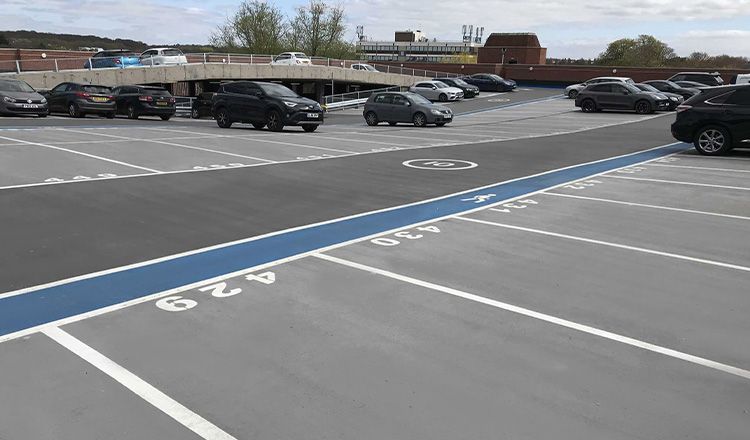
Multi-storey car parks are exposed to a unique combination of mechanical, chemical and environmental stresses, that accelerate the deterioration of reinforced concrete. Water penetration, de-icing, coastal and cast in chlorides, carbonation and temperature changes all contribute to corrosion of reinforcing steel, which in turn leads to cracking, spalling and a decline in structural capacity.
To deliver a durable refurbishment strategy it is essential to combine effective concrete protection methods with long-lasting waterproofing solutions.
Concrete corrosion control technologies such as galvanic anodes work at the reinforcement level, while systems like Triflex liquid applied waterproofing prevent the ingress of water and contaminants at the surface. When used together, they create a comprehensive protection approach that targets both the cause and the pathway of deterioration.
Understanding the role of galvanic anodes in concrete repair
Galvanic anodes provide corrosion protection by electrically connecting a more reactive metal such as zinc to the reinforcing steel, so that the anode corrodes in preference to the steel. This sacrificial action stops and prevents future corrosion of the reinforcement in chloride-contaminated or carbonated concrete.
They are typically embedded either within or around patch repairs or distributed across wider areas depending on the condition of the structure. Once installed, the anodes deliver a protective current without the need for external power, making them a low maintenance, long-term solution.
Galvanic anodes are effective in managing corrosion in areas where chlorides have already penetrated the concrete, or where repaired areas are at risk from the ‘incipient anode’ effect, which is the accelerated corrosion process that can occur around patch repairs.
Why anodes alone are not enough
Although galvanic anodes actively protect steel from corrosion, they do not stop water or contaminants from entering the structure. If the concrete surface is left unprotected, de-icing salts, fuel, oils and water will continue to penetrate and increase the corrosive environment around the reinforcement. This is why combining corrosion protection with effective waterproofing is essential for car park refurbishment.
The role of Triflex waterproofing systems
Triflex waterproofing and surfacing systems provide a seamless, fully bonded barrier that prevents water and harmful contaminants from entering the concrete. This stops the primary mechanisms that transport moisture, chlorides and oxygen to the steel reinforcement.
These systems are designed specifically for the harsh conditions found in multi-storey car parks, including heavy traffic loads, chemical exposure and extreme temperature variations. Triflex systems offer long-lasting structural protection as they are UV and chemically resistant, as well as dynamically crack-bridging, which is essential in high movement structures such as car parks.
How anodes and Triflex waterproofing work together creating a defence at both surface and steel level
Galvanic anodes protect steel reinforcement from corrosion by addressing the cause at the steel surface, while Triflex waterproofing systems remove the environmental conditions that allow corrosion to continue. This dual action approach significantly extends the service life of reinforced concrete structures.
Stopping future chloride ingress
While anodes are designed to stop and prevent future corrosion caused by existing chloride contamination, they cannot prevent new chlorides entering the concrete. Triflex waterproofing creates a continuous barrier that prevents further chloride penetration from de-icing salts or other sources, ensuring that the anodes can perform as designed.
Supporting the performance of repair works
In many refurbishment projects patch repairs are undertaken to replace delaminated or spalled concrete. These areas are vulnerable to ‘incipient anode’ corrosion, where active corrosion can shift to surrounding contaminated concrete. Galvanic anodes mitigate this effect and Triflex systems then encapsulate surfaces preventing renewed moisture movement through the slab.
Reducing long-term maintenance needs
Triflex systems have a long service life and require very little maintenance, while anodes operate continuously without external power or monitoring. This combination delivers a reliable, cost-effective maintenance strategy for car park owners and operators.
A holistic approach to car park refurbishment
Successful multi-storey car park refurbishment may require both structural and surface level intervention. Galvanic anodes address the internal electrochemical processes that lead to reinforcement corrosion, while Triflex waterproofing systems protect against external environmental exposure. Together they offer a robust, long-term defence against the most common causes of deterioration in car parks including moisture penetration, chloride ingress, freeze / thaw damage and chemical attack.
By integrating corrosion control and advanced waterproofing technologies, asset owners can significantly extend the life of their car park, reduce unplanned repair costs and improve safety and reliability for users.