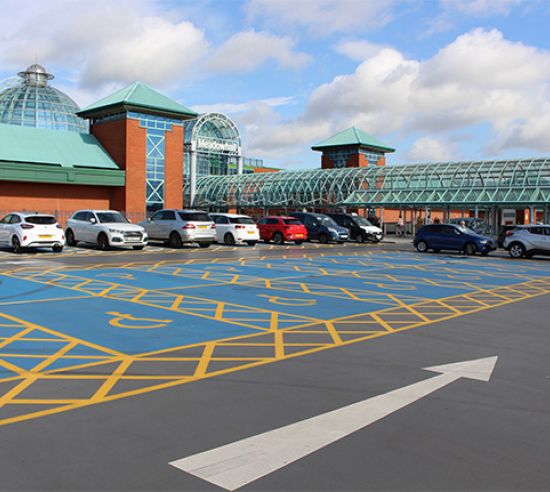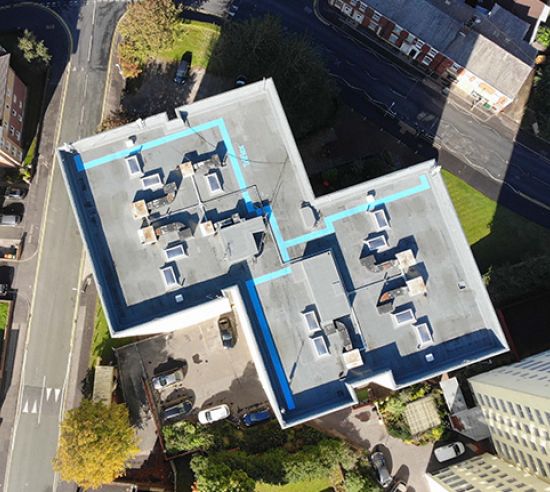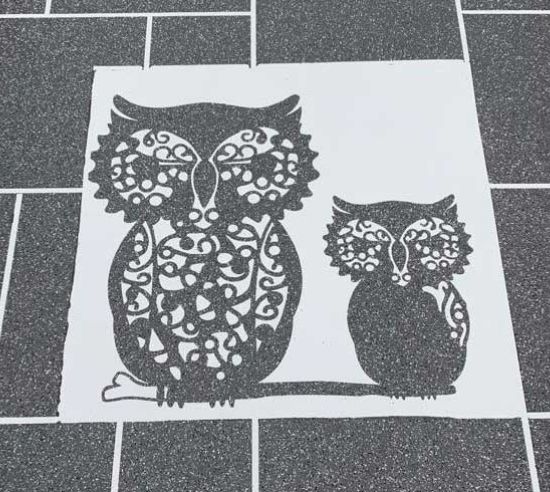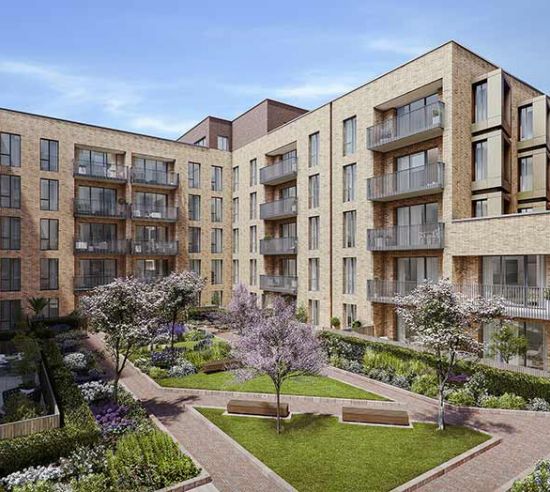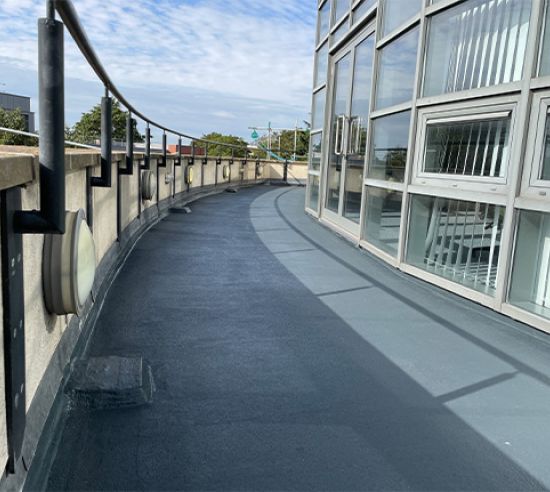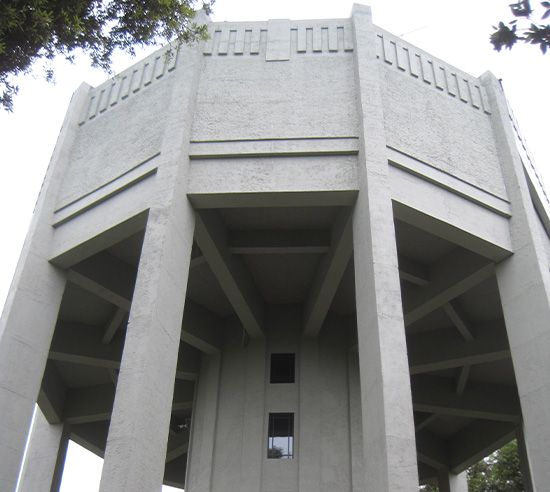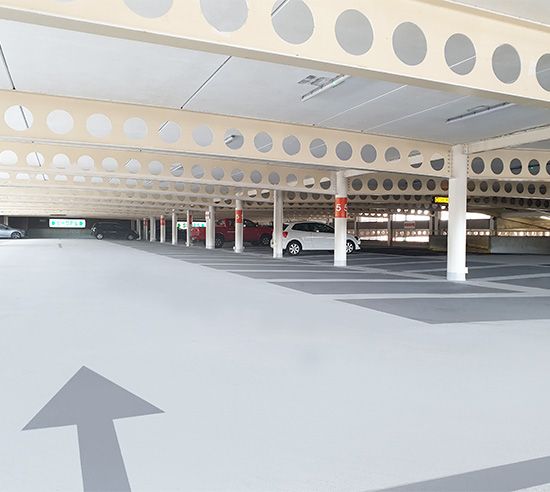

As we strive for more sustainable solutions for the built environment, an approach of overlaying an existing waterproof membrane should be the first consideration. This method of refurbishment, whether flat roofs, walkways, terrace, balcony or car park deck has benefits over a strip up and replace option.
Reduce waste
Stripping often involves removing layers of existing systems, insulation and even parts of structural decks that may include non-recyclable waste to landfill. In the case of older flat roofs, hazardous materials may require specialised services for removal and safe disposal. The reuse of existing materials can significantly reduce the amount of waste. Where existing systems have some damage, localised repairs or partial strip ups can be possible, reducing the need for full strip ups.
Reduce the risk of water ingress during the renovation
Leaving existing systems in situ not only means less waste, but also reduces the risk of exposing underlying structures to the elements during the renovation process. Reducing the risk of water ingress and associated risks for building functionality means that buildings can continue to be occupied with minimal disruption to residents, workers or operations.
Reduce impact on structural integrity
Strong, durable and lightweight, Triflex flat roof overlay systems have minimal impact on thresholds and upstand heights or structural deadload integrity.
Re-use of materials in the future
For an overlay solution from Triflex, it’s not only a reuse of materials today to consider. With highly durable systems that readily adhere to themselves, a future overlay with a Triflex PMMA resin can provide an even longer-term durability and warranty reset. All of which help to reduce the overall environmental impact of the project with life cycle benefits.
Key considerations for overlay
At Triflex we have decades of experience in overlay waterproofing solutions. Our advanced PMMA technologies employed in our liquid systems have properties which are proven in this approach to refurbishment. This coupled with our outstanding technical knowledge and experience means that our on site surveys, testing and bespoke project specification proposals deliver confidence in a Triflex overlay solution.
Condition of substrate: From visual survey to core testing, the condition of the substrate and the underlying build-up is evaluated by our experienced team.
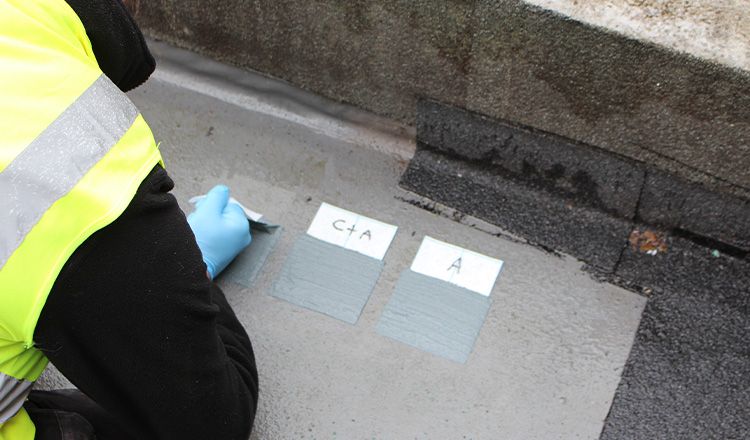
Compatibility: On-site peel strength adhesion testing and laboratory PVC singly-ply plasticiser migration testing are just some of the approaches we take to deliver confidence in proposed overlay system compatibility. With Triflex systems tested on thousands of substrates, trust our experience.
Falls and drainage: Improving drainage and repairing defects is an important consideration prior to overlay, particularly if there are deflections causing ponding water. However sometimes flat roofs come with limitations of thresholds, upstand heights and the like. So, whilst it would be ideal to remove any ponding water as part of a flat roof refurbishment, it is not always possible. It’s good to know that PMMA hydrolysis resistant properties means that standing water poses no threat to its longevity.
Thermal improvements: An overlay solution can incorporate further thermal improvements to a higher standard. Tapered insulation schemes can also be introduced to improve drainage and reduce ponding water in problematic areas. Here it is particularly important to consider condensation risk analysis and ventilation requirements.
Condensation risk analysis: As art of our evaluation, we undertake condensation risk analysis to evaluate the likelihood for interstitial condensation for the proposed new build-up, in line with BS 5250 (2021): Management of moisture in buildings code of practice. Any changes of use that may accompany the refurbishment are of course considered.
Top 10 properties of PMMA for flat roof waterproofing overlays
1. High compatibility: It adheres to most existing waterproofing membranes, reducing the need for substrate removal and enabling easy overlays.
2. Excellent adhesion: PMMA fully bonds to a wide range of substrates, creating a seamless waterproofing membrane that prevents water underflow in case of damage.
3. Flexibility and crack bridging: PMMA accommodates structural movement and thermal expansion, ensuring durability in dynamic conditions.
4. Seamless application: Creates a monolithic self-terminating waterproofing membrane, unifying different existing materials and eliminating potential weak points at joints, seams and overlaps.
5. Rapid curing: Ultra fast curing, even at low temperatures, minimises project delays and allows year-round installation.
6. Lightweight solution: Minimal added weight makes PMMA ideal for structures with load constraints, and is applied easily with a roller.
7. No hot works and versatile application: Cold application eliminates fire risks, allowing installation with minimal disruption to occupants and with choice of UV stable, pigmented custom finishes.
8. Chemical and water resistance: Maintains integrity under standing water and chemical exposure, ensuring long-term performance.
9. Sustainability features: Reduces waste and carbon footprint by avoiding full membrane removal and low-VOC formulation align with sustainable building practices.
10. Durability and longevity: UV, weather, and aging resistance provide long-lasting waterproofing with certified 25-year service life.